The most useful everyday dress is the one that works across more than one part of your day. Think school drop-off, a desk, errands, and a casual dinner—not a garment that needs a special occasion to leave the closet.
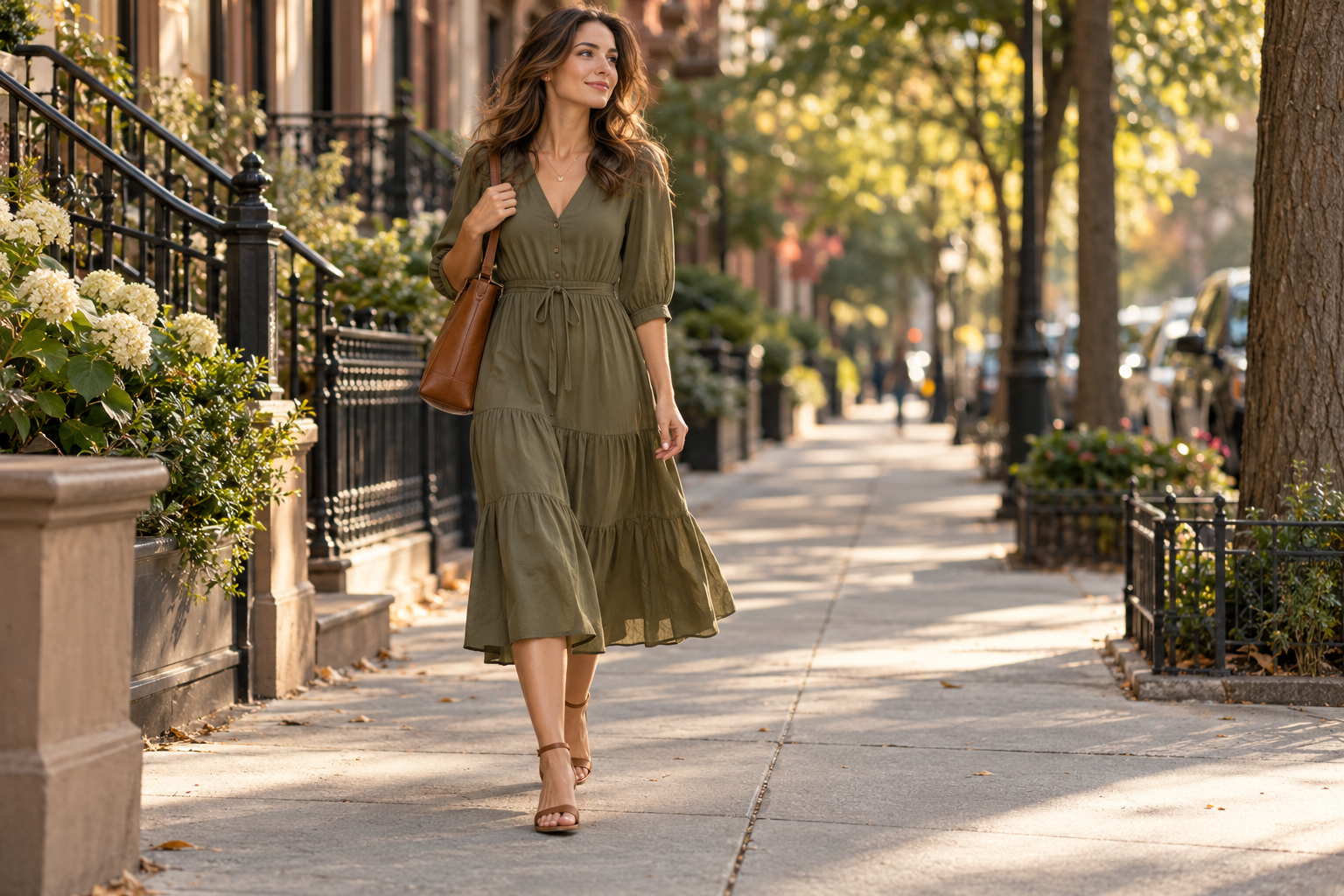
Start with the shape you already feel comfortable wearing. A shirt dress gives you adjustable coverage; a wrap-inspired cut can accommodate small changes in fit; a simple A-line leaves room to move. Check the garment measurements against a dress you own, especially across the bust, waist, and hip. Pockets are useful only if they lie flat when filled.
Start with the day you need it for
For a warm commute, breathable cotton, linen, or a light viscose weave can feel easier than a fully lined synthetic dress. In air-conditioned offices, a cardigan or unlined blazer makes the same outfit more adaptable. Check whether a fabric wrinkles quickly if you spend time sitting or travel with it folded.
A useful check is to imagine the item in the middle of an ordinary day, not just at the moment you first put it on. If it needs constant adjusting, special care you cannot keep up with, or a second purchase to become usable, that belongs in the decision.
What to compare before choosing
Start with the shape you already feel comfortable wearing. A shirt dress gives you adjustable coverage; a wrap-inspired cut can accommodate small changes in fit; a simple A-line leaves room to move. Check the garment measurements against a dress you own, especially across the bust, waist, and hip. Pockets are useful only if they lie flat when filled.
Product descriptions can help with measurements and materials, but they cannot tell you exactly how a garment will sit on your body or how a shoe will feel after hours. Use the listed details to narrow your options, then check seller sizing guidance, return terms, and care instructions.
The trade-offs are part of the choice
Light fabrics are comfortable in heat but may need a slip or careful laundering. A structured cotton blend can look neat for longer but feel warmer. Dark colors hide some marks; pale colors can be more versatile in summer but may need more attention to opacity and undergarments.
There is rarely a universally best material, silhouette, or price point. A more useful comparison is the one that reflects your climate, how often you expect to wear the piece, and what care it asks of you.
A quick checklist before you buy
- Read the care label before buying; frequent dry cleaning can change the true cost of an inexpensive dress.
- If ordering online, note the model height only as context and rely on the listed garment length and your own measurements.
- For repeat wear, choose shoes and a layer you already own before adding a new dress to your cart.
When details are missing, ask the seller or choose a listing that explains the relevant measurements and care. Keep a copy of the order details until you know the item works for you.
Frequently asked
What length works for everyday wear?
Choose a hem you can walk and sit in comfortably; test it with the shoes you plan to wear most often.
Are pockets essential?
They are convenient, but deep or heavy pockets can pull a light skirt out of shape.
Fashion Reviews Online may earn a commission from qualifying purchases made through some links. Our recommendations are based on published product information and practical buying criteria. How we disclose.